

On June 16, 2026, a group of 14 international students from eight countries — all enrolled at Fudan University Law School — visited the Second Branch of the Shanghai People's Procuratorate for an immersive study session on financial prosecution, led by Associate Professor Zhu Dan. The visit took place against the backdrop of the 15th anniversary of Shanghai’s specialized financial prosecution system, a milestone that highlights the Branch’s notable achievements in combating financial crime and advancing foreign-related rule of law. Organized as a practical extension of the English-taught course ‘White-Collar Crime and Chinese Criminal Law’, a core component of Fudan’s LL.M. program in Chinese Business Law, the event embodied the deepening academic-prosecutorial partnership. By bridging legal theory and practice, it gave international students a window into how China’s criminal justice system tackles complex financial cases, while deepening their understanding of the country’s evolving approach to foreign-related rule of law.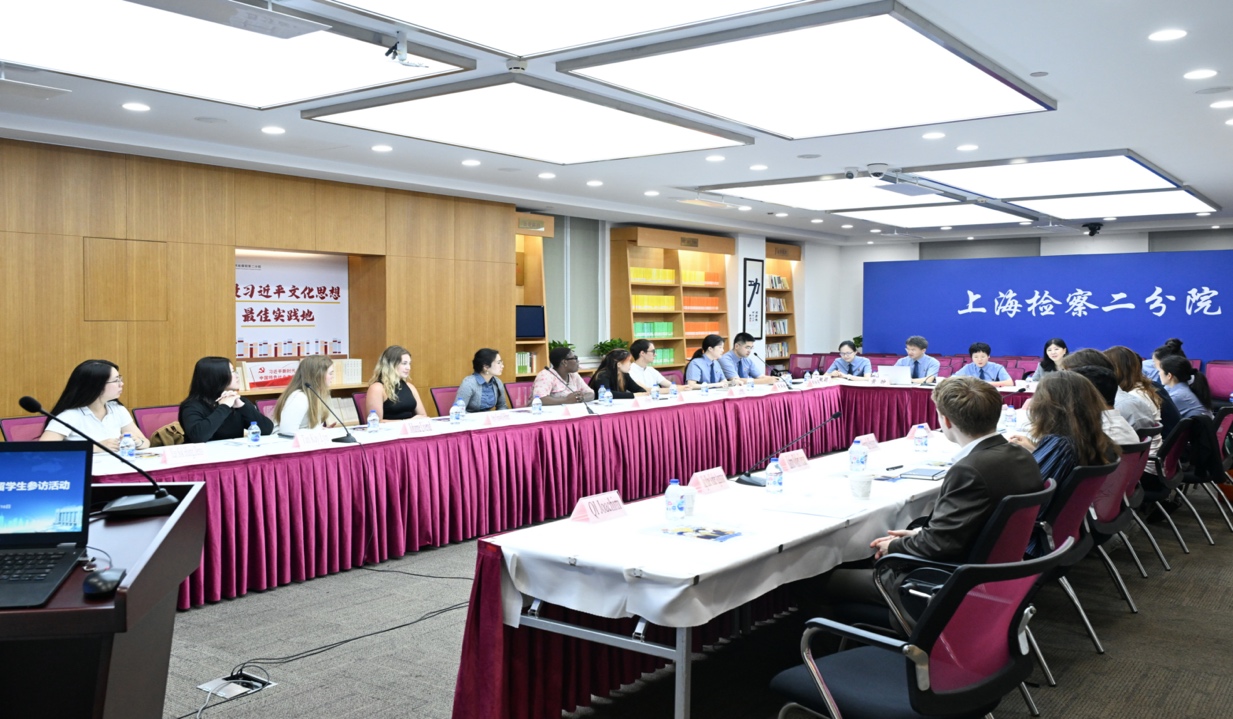
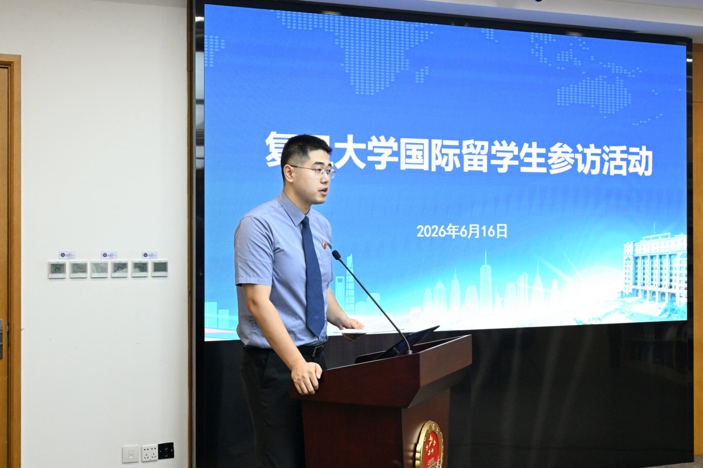
The event was held in the library on the second floor of the Second Branch and hosted by Director Li Xiaowen of the Research Office. The session opened with the Supreme People's Procuratorate's promotional video, ‘A Light That Warms Every Ordinary Life’, which underscores the procuratorate’s commitment to justice and public service. For the international participants, the film helped illustrate why Chinese prosecutors devote substantial effort not only to enforcing the law but also to preventing financial crime before it occurs.

Zhang Shuyu, a member of the Branch’s foreign-related prosecution team, introduced the history and functional scope of the Second Branch. Her presentation offered a broad perspective on the diverse roles played by Chinese procuratorates, giving the international students a richer picture of the prosecution system beyond the courtroom.
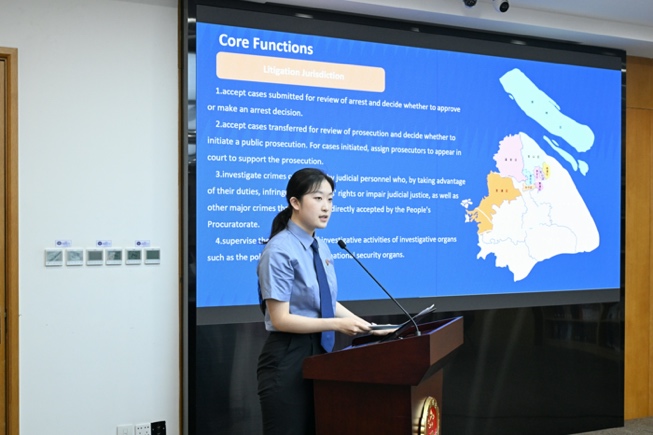
Hu Haoyu, also a member of the foreign-related prosecution team, presented on the Shanghai Banking and Insurance Financial Crime Research Center, which is based at the Branch. He detailed the primary financial crime offenses under Chinese law, corresponding sentencing frameworks, and the Center’s pivotal role in tackling complex crimes, conducting case-based research, developing best practices, cultivating specialized talent, and strengthening preventive governance.
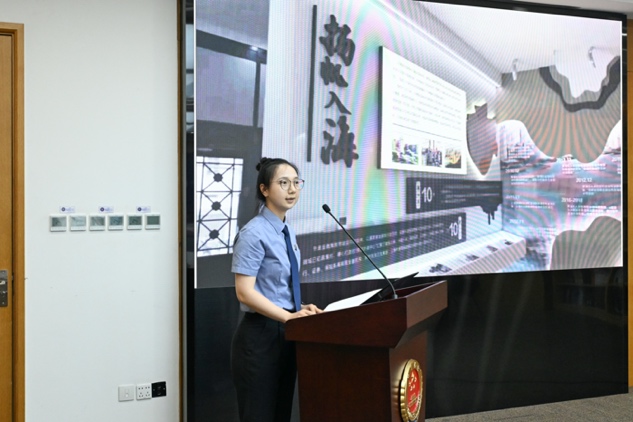
The session also featured contributions from the Huangpu District Procuratorate. Director Pan Yun, head of the district’s financial prosecution unit, joined the event along with two assistant prosecutors. Wang Xiaojie, a member of the district’s foreign-related team, delivered a presentation on the Bund Financial Prosecution Comprehensive Practice Base—the first of its kind in Shanghai. Guided by its superior procuratorates at the municipal and branch levels, the base supports integrated enforcement efforts, from tackling difficult cases to mitigating financial risks and curbing financial crime, demonstrating the proactive role of prosecuting authorities in advancing Shanghai’s ambition as a global financial hub.
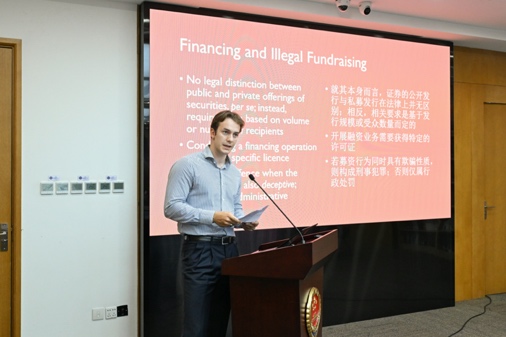
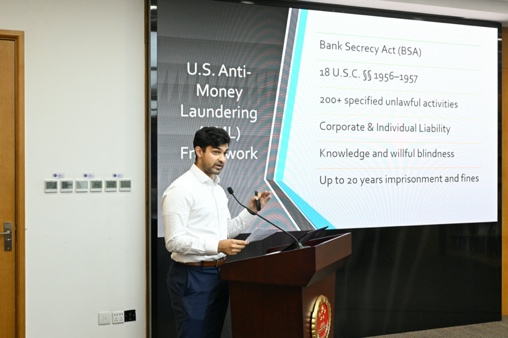
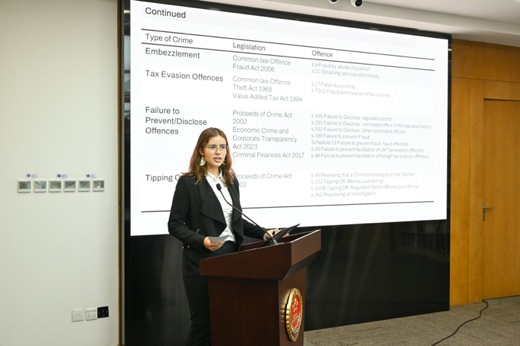
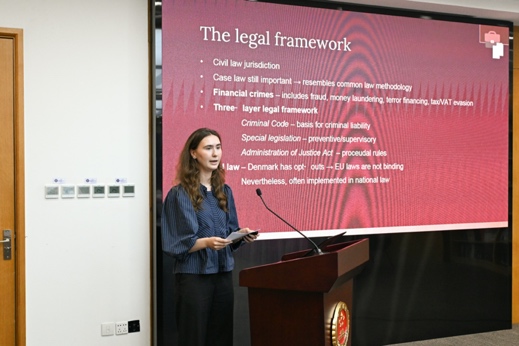
Five international student representatives then delivered country-specific presentations on their respective national frameworks for combating financial crime. William Rohr-Torp Fluck presented on Norway’s approach to the criminal classification of illegal fundraising, the regulatory framework for private lending rates, and anti-money laundering (AML) measures for cryptocurrencies. Hanzala Hussain discussed the United States’ AML framework as applied to cryptocurrencies, along with its extraterritorial jurisdiction and international cooperation mechanisms. Valeria Wilding outlined the United Kingdom’s major financial crime categories, its investigation and prosecution procedures, and the corporate criminal liability regime for failure to prevent fraud. Kathrine Wohlers Sørensen explained the two-tier structure of money laundering and handling proceeds of crime offenses under Danish criminal law. Azizov Shokhjakhon provided an overview of Uzbekistan’s AML legal framework, virtual asset oversight, and extraterritorial prosecution practices in cross-border money laundering cases.
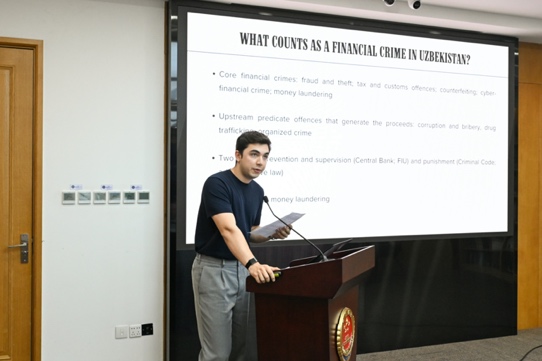
The open-floor discussion was lively and substantive. Students raised practical questions on a wide range of topics, including pursuing transnational financial crimes in the absence of extradition treaties, prosecuting cryptocurrencies-related money laundering, collecting cross-border criminal evidence, overcoming prosecutorial challenges in complex financial crime cases, sentencing benchmarks for money laundering, and evidentiary standards for foreign predicate offenses. Director Li Xiaowen and Deputy Director Huang Chong of the Research Office drew on their extensive trial experience to offer detailed and practical responses.



In her closing remarks, Associate Professor Zhu Dan noted that this marked the first group visit by Fudan international students to a Chinese Procuratorate, and that the students had greatly benefited from the practitioners’ frontline insights. She also underscored the special value of the exchange: students from both common law and civil law jurisdictions shared their national perspectives, which, together with the prosecutors’ hands-on experience, generated a productive two-way dialogue. The discussions ranged across issues such as the scope of financial offenses, corporate criminal liability, sentencing benchmarks, and the treatment of virtual assets—revealing both convergences and divergences that deepened mutual understanding across different legal systems. She expressed hope that this visit would serve as a starting point for a new model of exchange in transnational criminal justice, contributing fresh perspectives to cross-border legal cooperation.

Conducted in English, the event represented a fruitful collaboration between Fudan Law School and the Second Branch of the Shanghai People’s Procuratorate in cultivating internationally oriented legal talent. By extending the classroom to the frontline of judicial practice, the visit offered international students a valuable window into China’s legal and prosecutorial operations, while also broadening the global outlook of the participating prosecutors and assistants. Their ability to host and present in English not only demonstrated strong professional expertise and cross-cultural communication skills, but also reflected the openness and confidence of China’s prosecution authorities in engaging with international legal discourse. This effort to ‘tell China’s prosecution story in the world’s languages’ serves as a vivid example of Shanghai’s commitment for professionalized and internationalized prosecution services, and opens new avenues for deepening academic-prosecutorial partnerships and training globally competent legal professionals.
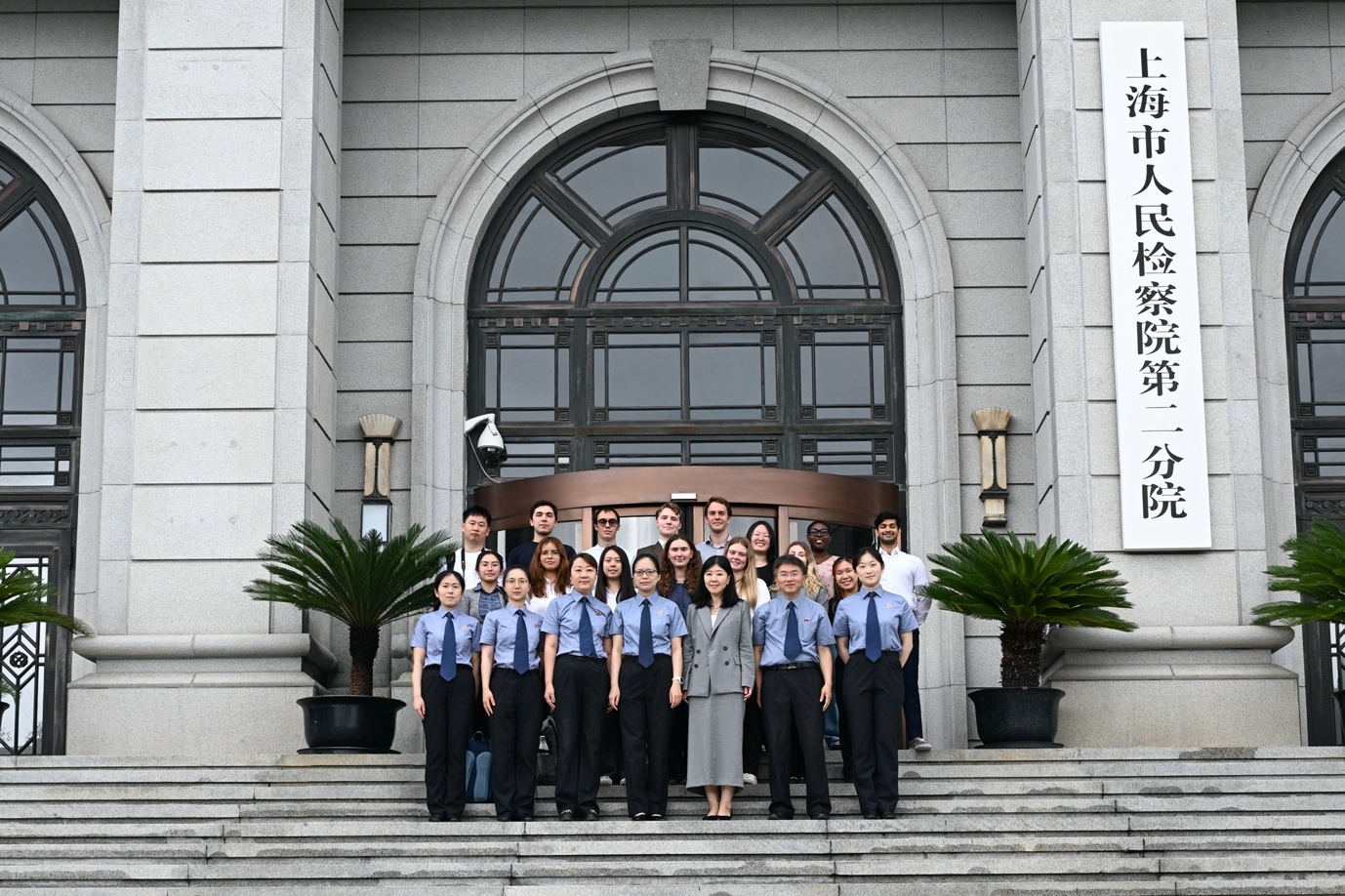
Fudan Law School remains committed to advancing international exchanges and cooperation in foreign-related legal fields, and to exploring diverse pathways to enhancing legal education in a global context. Leveraging Shanghai’s strategic position as an international commercial and financial center, the School has offered an LL.M. Program in Chinese Business Law since 2010, which has become an important platform for cross-cultural legal dialogue. Looking ahead, Fudan Law School will continue to strengthen collaboration with practical institutions, enrich its training models for internationally oriented legal professionals, and expand opportunities for international students to engage with Shanghai’s legal community—contributing Fudan’s wisdom and expertise to the city’s ambition of becoming a global hub for foreign-related legal talent.


